The Essential Smartphone Camera Icons Collection for Creators
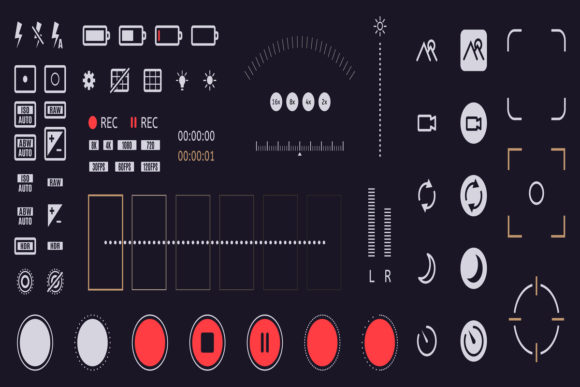
In today's digital landscape, visual clarity is non–negotiable. Whether you're building a mobile app, designing a game interface, or prototyping a new gadget, the icons you choose are a silent language that guides your users. A collection of Smartphone Camera Icons serves as a foundational toolkit, providing the precise graphical elements you need to represent camera functionality without starting from a blank canvas every time. This isn't just about decoration; it's about efficient, professional communication.
Beyond Decoration: Icons as Functional Communication
Consider a user opening your new photo–editing software. A universally understood camera icon for 'capture' or 'settings' immediately builds intuitive trust. Using a cohesive set of Smartphone Camera Icons ensures that every graphical reference to camera features—from shutter buttons to gallery access—is visually consistent. This consistency reduces cognitive load for your audience, allowing them to focus on the experience rather than deciphering your interface. For entrepreneurs and developers, this translates directly to lower user frustration and higher engagement rates.
Streamlining the Design and Development Pipeline
The practical value of a ready–to–use icon set lies in its impact on your workflow. Imagine the typical process: a designer creates an icon, sends it to a developer for implementation, adjustments are requested, and files are exchanged repeatedly. With a collection that includes an EPS10 file—a vector format—and a 72ppi JPEG preview, you sidestep much of this back–and–forth. The vector file is scalable to any size without quality loss, perfect for everything from a tiny mobile button to a large instructional graphic. The JPEG preview offers a quick reference for discussions or placement mockups. This package essentially provides a single, agreed–upon visual asset that both design and technical teams can use, saving hours of production time.
Who Benefits Most from a Dedicated Camera Icon Set?
While useful for a broad range of creators, certain professionals will find immediate, tangible value. App Developers and UI/UX Designers are primary beneficiaries, as they require pixel–perfect, theme–consistent icons for user interfaces. For Indie Game Developers, these icons can quickly populate in–game camera controls or photography–based gameplay mechanics, adding polish without extensive graphic design overhead. Educators and Content Creators producing tutorials or courses on smartphone photography can use these icons in their materials to create clear, professional–looking diagrams and instructions. Even Marketers crafting ads for camera–related products can integrate them into banners or explainer graphics for a cohesive look.
Enhancing Professional Presentation Across Projects
A common challenge for freelancers and small business owners is maintaining a professional aesthetic across diverse client work. Using a well–crafted set of Smartphone Camera Icons elevates your deliverables. Instead of sourcing a disparate mix of icons from various free sites—which often results in inconsistent styles and licensing concerns—you have a reliable, cohesive collection. This allows you to present prototypes, mockups, and final products with a unified visual language. The result is a stronger, more credible presentation that communicates attention to detail, ultimately supporting client confidence and project approval.
Realistic Application Scenarios and Recommendations
Let's move from abstract benefits to concrete use cases. A blogger writing about smartphone camera techniques might use the icons within their article to visually break down the camera app interface, making the tutorial far easier to follow. A developer prototyping a new social media app with a strong focus on video could use the icons to map out the recording screen flow rapidly, testing usability before any backend code is written. In these scenarios, the icon set acts as a practical facilitator, speeding up the creative process.
It’s wise, however, to consider fit. This particular set, with its EPS10 and preview JPEG, is ideal for digital applications. If your primary need is for high–resolution print material at large sizes, the vector EPS10 file is perfect. But if you require icons in specific raster formats (like PNG with transparency) at multiple pre–set sizes, you might need to convert the vector file or seek a supplementary collection. The key is to assess your primary output medium. For most software, app, and web–based projects, the provided formats cover the essential needs.
Supporting Creativity, Not Replacing It
An important observation is that a collection of Smartphone Camera Icons is a starting point, not a creative cage. The vector format allows you to modify colors, combine elements, or adapt the icons to fit your specific brand palette and style guide. This supports creativity by removing the groundwork, freeing your time and mental energy to focus on the unique aspects of your project—the layout, the user journey, the interactive elements. You solve the problem of foundational graphics, so you can concentrate on solving the bigger, more complex problems that define your work.
The Cumulative Impact on Efficiency and Outcomes
When you amalgamate these benefits—time saved in design–development handoffs, consistency achieved in user interfaces, professionalism conveyed in client presentations—the impact on your overall efficiency is significant. For a solo entrepreneur, this might mean launching a product mockup a week earlier. For a development team, it could reduce UI–related bug reports because users intuitively understand the controls. Efficiency here isn't just about speed; it's about creating a smoother path to a higher–quality end result. The Smartphone Camera Icons collection, by providing a reliable, scalable graphical foundation, helps you build that path.
Ultimately, the value of such a resource is measured in the removal of friction. It simplifies the decision of "what icon do we use for the camera?" It solves the problem of inconsistent visual assets across a project. It supports the goal of launching a clear, intuitive, and professionally presented digital product. In a world where attention is scarce and user experience is paramount, these are not small advantages. They are the practical details that separate a functional project from a polished, successful one.