The Cartoon Office Chair: A Visual Asset for Modern Professional Narratives
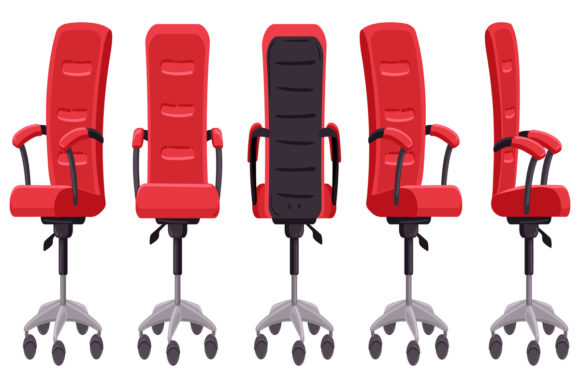
In the evolving landscape of professional branding and digital content creation, visual assets transcend mere decoration; they become foundational elements of communication. The Cartoon Office Chair represents more than a whimsical illustration. It is a versatile, stylized digital product designed for creators who need to convey concepts of workspace comfort, productivity, and modern professionalism without relying on generic stock photography. This set, typically containing an EPS10 vector file and a preview JPEG, serves as a bridge between abstract ideas and engaging visual storytelling.
Embedded in Contemporary Creative and Business Trends
The relevance of the Cartoon Office Chair is intrinsically linked to several converging trends. The demand for unique, scalable vector art has surged as businesses and creators seek to establish distinct visual identities across platforms—from websites and apps to commercial videos and marketing materials. Unlike photorealistic images, cartoon-style assets offer a blend of familiarity and abstraction, allowing audiences to focus on the concept (like comfort or innovation) rather than a specific, potentially dated, product model.
Furthermore, the rise of remote work, digital entrepreneurship, and the "creator economy" has reshaped how we depict workspaces. The traditional, sterile office imagery no longer resonates with a distributed, flexible workforce. A Cartoon Office Chair can symbolize a dynamic, personalized, and ergonomic workspace—key values in today's professional discourse—without being constrained by the limitations of a real-world photograph. It fits seamlessly into narratives about gaming chair ergonomics, home office setups, or futuristic workplace concepts, all while maintaining a clean, professional aesthetic.
Why Attention is Growing: Beyond the Generic Feature List
Professionals are paying attention to assets like this because they address a core need: contextual flexibility. A marketer crafting a commercial for a new gaming chair needs visuals that emphasize comfort, style, and adaptability. A real chair photo might lock the ad into a specific aesthetic or era. The cartoon version, however, allows the narrative to be about the experience of comfort and performance, not the specifics of the chair’s fabric. It becomes a symbolic placeholder for the product’s benefits.
Similarly, an entrepreneur designing a pitch deck for a workspace wellness app can use the Cartoon Office Chair to visually anchor discussions about posture and environment without diverting attention to a branded product. This abstraction is powerful. It enables the creator to guide the audience’s focus toward the intended message—innovation, well-being, modernity—free from the visual clutter of realistic details.
The Shift in Creative Workflows and Expectations
The adoption of such assets signals a change in creative workflows and client expectations. Speed and consistency are paramount. An EPS10 file provides infinite scalability and easy editing within design software like Adobe Illustrator or CorelDRAW, enabling rapid adaptation across multiple media outputs—a banner ad, a social media graphic, a commercial scene. The included 72ppi JPEG preview facilitates quick placement in mockups or initial concepts.
This efficiency aligns with the expectation for agile content production. Freelancers and marketing teams often operate under tight deadlines, needing assets that are immediately usable and adaptable. The Cartoon Office Chair set meets this need by being a ready-made, professional-grade component, not a starting point for a lengthy illustration process. It reflects a move towards a building-block methodology in digital design, where high-quality, thematic elements are combined to rapidly construct coherent visual narratives.
Practical Applications and Observations
Consider these practical scenarios where this asset moves beyond a simple graphic:
- Gaming Chair Commercials: An animator can integrate the chair vector into a dynamic scene, morphing it or placing it in aspirational environments (e.g., a sleek digital arena) to highlight features like adjustability and support, all while maintaining a consistent, branded cartoon style.
- Office Furniture Marketing Material: A brochure about ergonomic office solutions can use the cartoon chair as a recurring icon throughout different sections, visually unifying the content and representing the product category rather than a single item, making the material feel conceptual and comprehensive.
- Workspace Comfort Projects: A UX designer prototyping a wellness application might place the JPEG preview in interface mockups to represent a "user's chair," immediately communicating the app's context without requiring custom illustration at the wireframe stage.
These observations underscore a key insight: the asset’s value is not its depiction of a chair, but its function as a visual shorthand for broader ideas of work, comfort, and technology integration.
Connecting to Larger Developments in Technology and Communication
The utility of the Cartoon Office Chair connects to larger developments in digital communication. As interfaces become more visual and immersive (from augmented reality workspaces to interactive web platforms), the need for clean, recognizable iconography and vector art grows. This asset type feeds into the ecosystem of design systems and component libraries used by SaaS companies, app developers, and digital marketers.
Moreover, in the context of AI-assisted design and automated content generation, well-defined, semantic vector assets become crucial inputs. A clearly labeled Cartoon Office Chair EPS file can be more reliably interpreted and manipulated by design tools than a complex photograph. It represents a step towards a more structured, interoperable visual language for professional content—a language where meaning and style are separable and controllable.
A Forward-Looking Perspective on Professional Imagery
Looking ahead, the trajectory points towards increased use of stylized, thematic vector assets. The blend of professional necessity and creative expression demands resources that are both practical and evocative. The Cartoon Office Chair exemplifies this balance. It does not speculate on future chair designs; instead, it provides a timeless visual vessel to carry discussions about whatever those future designs might embody—be it biometric integration, sustainable materials, or cognitive ergonomics.
For professionals, creators, and entrepreneurs, investing in such assets is not merely about acquiring a graphic. It is about investing in a flexible tool for narrative construction. It empowers them to visually articulate the evolving relationship between individuals, their tools, and their workspaces—a central theme in modern professional life. As workspaces continue to digitize and personalize, the ability to visually symbolize comfort, efficiency, and innovation with clarity and style will remain indispensable, placing versatile, conceptual assets like the Cartoon Office Chair firmly at the heart of effective professional communication.